- home
- News

Latest News
May 6, 2026
Dream Sports is trading fantasy teams for financial portfolios. The company has debuted a stock broking platform, DreamStreet, to emerge as a fintech powerhouse, leveraging its user base. Can it turn sports fans into savvy investors?
From Gaming To Wealth: The new SEBI-registered platform marks another step in Dream Sports’ post-RMG (real money gaming) reinvention. DreamStreet currently lets users invest in stocks, ETFs and F&O, with IPO access coming soon. The platform will offer AI-powered guidance through its AI investing companion Veda and SEBI-registered analysts.
Eye On Non-Metros: With DreamStreet, the startup is not just betting on product, but on distribution and network effects. The company will be looking to leverage its large non-metro user base, many of whom could be first-time investors, to carve a niche in the hyper-competitive wealthtech segment.
The Fintech Pivot: DreamStreet isn’t an isolated bet. It builds on Dream Money, which the company launched last year to offer mutual funds, gold, SIPs, fixed deposits and personal loans. Together, the two products show that Dream Sports is trying to move from a gaming-first identity to a broader financial services platform built around the same user base.
Pressure To Diversify: The pivot has equally been forced as much as it has been strategic. Following the Centre’s ban on RMG last year, Dream Sports has undertaken a series of cost cutting measures, paused sponsorships, consolidated infrastructure and shut down non-core businesses to preserve capital.
To manage this complexity, Dream Sports has adopted a startup-within-a-startup model, redeploying C-suite executives to lead these independent verticals.
Challenges Ahead: Launching a product is the easy part, but the real challenge lies in execution. With Zerodha and Groww already dominating the retail investing paradigm, Dream Sports will need much more than AI and distribution to stand out in the competitive broking space.
With its work cut out, how is the erstwhile fantasy gaming giant getting a fintech makeover? Let’s find out…
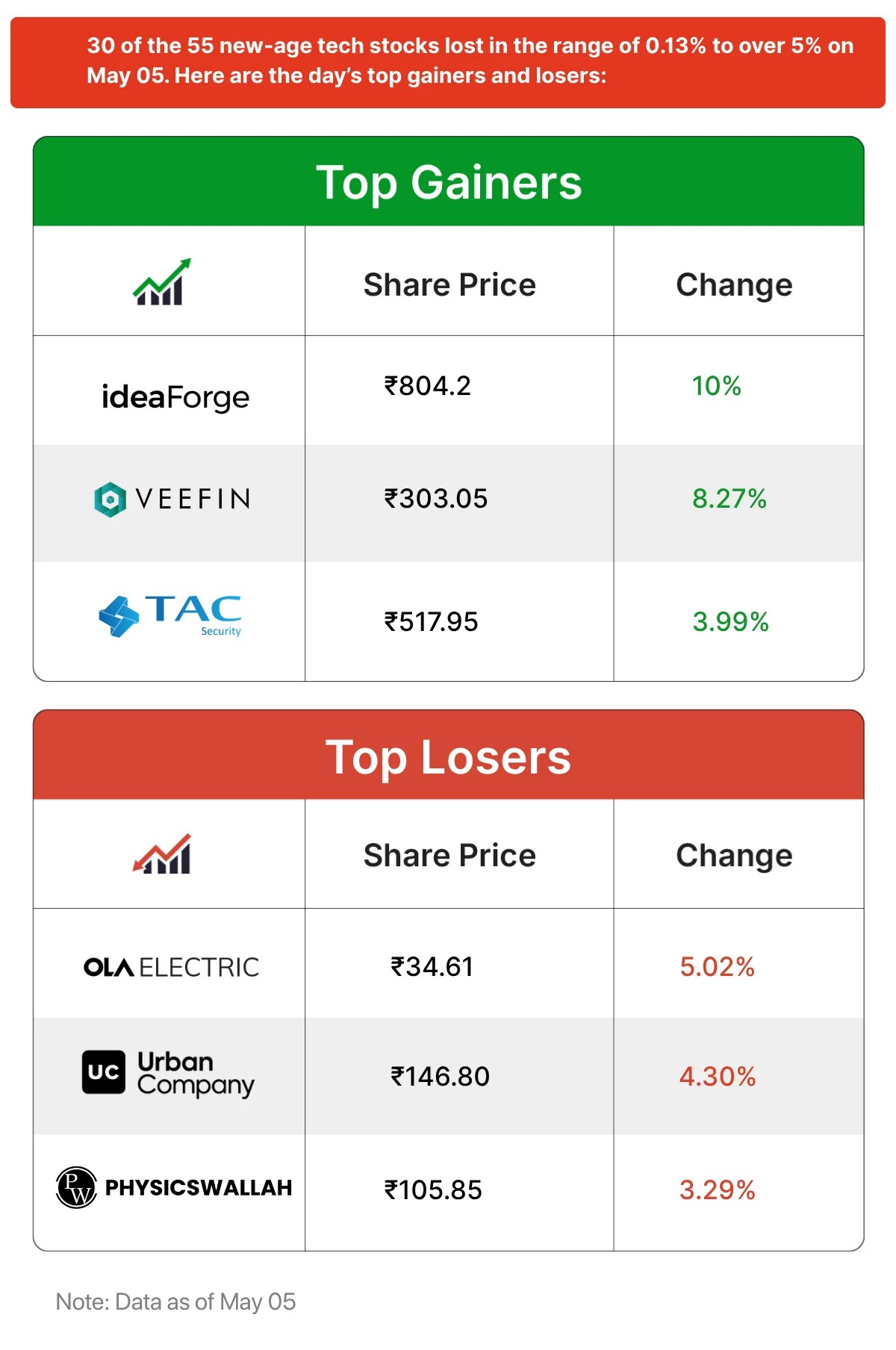
As AI, 5G and autonomous systems gain ground, the demand for high-performance chips is rising fast. But designing those chips takes deep expertise in radio frequency RF and low-power systems, areas where India still has room to grow. MumbaiSemi is trying to fill this gap.
Built For Performance: Founded in 2024, MumbaiSemi is a fabless semiconductor startup focused on manufacturing high-performance integrated circuits (ICs) for advanced applications. Its work spans RF, analogue, mixed-signal and digital chip design, putting itself in the middle of the most complex layers of some of modern electronics.
A Reconfigurable Core: The startup’s flagship product, DhruvaPro, is a reconfigurable frequency IC built to support global navigation systems including NavIC, GPS, Galileo and BeiDou. The chip is silicon-verified and designed for deployment in real-world conditions, with ESD protection, on-chip testing and the ability to operate in extreme environments.
Use Cases: MumbaiSemi is targeting sectors such as communications, AI/ML hardware, autonomous vehicles and IoT, areas where reliability and efficiency matter as much as performance. It is also developing advanced transceivers for 5G and WiFi, high-speed data communication chips and systems for autonomous driving applications.
With the homegrown semiconductor market projected to cross $110 Bn by 2030, can MumbaiSemi help India dominate chip design?
India’s sneaker market is shifting from shelves to subculture. Driven by hype drops, resale dynamics and Gen Z-led demand, here is how sneakers are becoming a serious consumer play…